Buy businessleadership.eu ?
We are moving the project
businessleadership.eu .
Are you interested in purchasing the domain
businessleadership.eu ?
domain@kv-gmbh.de · 0541-91531010
Buy businessleadership.eu ?
What are math coefficients?
Math coefficients are the numerical factors that are multiplied by variables in algebraic expressions or equations. They represent the scale or magnitude of the variable in the expression. For example, in the expression 3x + 5, the coefficient of x is 3. Coefficients are important in understanding the behavior and relationships between variables in mathematical equations and expressions. **
What are coefficients in chemistry?
In chemistry, coefficients are the numbers placed in front of chemical formulas in a balanced chemical equation. These coefficients represent the ratio of moles of each substance involved in the reaction. Coefficients are used to balance chemical equations by ensuring that the number of atoms of each element is the same on both sides of the equation. They help in determining the stoichiometry of a reaction, which is the quantitative relationship between reactants and products in a chemical reaction. **

Similar search terms for Coefficients
Top-Angebote
Products related to Coefficients:
-
Sesderma Reti Age 5 Liposomal Serum Anti-Aging Innovation 30mLA facial serum for wrinkles and signs of ageing. Reduces wrinkles and fine lines. Hydrates and strengthens barrier. Restores youthful radiance. 5-Retinoid System: smooths wrinkles, accelerates renewal, and boosts collagen. Biomimetic Peptides: fill expression lines by stimulating collagen synthesis.53,26 £*Shipping: 5,22 £Secure redirect to the provider
-
Rethink Press Meltdown: How to Turn Your Hardship into Happiness by Jamie Alderton - Paperback Self-Help Book on Resilience, Mindset & Business GrowthMeltdown: How to Turn Your Hardship into Happiness is a practical self-help guide by fitness entrepreneur and transformation coach Jamie Alderton. Written for anyone whose life, work or wellbeing feels like it's falling apart, this book shows readers how to measure what's broken in their body, brain and business, then apply proven strategies to rebuild momentum, confidence and lasting happiness. Ever feel like your life is having a complete meltdown? This is the honest question at the heart of Jamie Alderton's guide. Rather than offering vague motivational platitudes, Meltdown gives readers a structured, repeatable framework for turning hardship into genuine progress. Alderton breaks life down into three core areas — body, brain and business — and teaches readers how to identify exactly what's gone off track in each. Published by Rethink Press, this paperback book is a brand-new self-help guide for those seeking to rebuild and find happiness.3,49 £*Shipping: 2,99 £Secure redirect to the provider
-
EmperorS4 Hanamikoji Compact Strategy Card Game for Two Players - Strategy GameA compact strategy card game set in Kyoto's Hanamikoji Street. Players compete to earn geisha favor by managing hand and making timed decisions. Designed for two players, suitable for ages 10 and up.13,79 £*Shipping: 3,95 £Secure redirect to the provider


-
How are extinction coefficients calculated?
Extinction coefficients are calculated by measuring the absorbance of a substance at a specific wavelength using a spectrophotometer. The absorbance value is then used in the Beer-Lambert law equation, A = εlc, where A is the absorbance, ε is the extinction coefficient, l is the path length of the sample, and c is the concentration of the substance. By rearranging the equation, the extinction coefficient (ε) can be calculated by dividing the absorbance (A) by the product of the path length (l) and concentration (c) of the substance. **
-
How do you determine the coefficients?
The coefficients in a mathematical equation are determined through a process called regression analysis. This involves using statistical techniques to find the best-fitting line or curve that represents the relationship between the variables in the equation. The coefficients are then calculated based on the data points and the specific regression model being used, such as linear regression or polynomial regression. The goal is to find the coefficients that minimize the difference between the predicted values from the model and the actual observed values in the data. **
-
How do I determine the coefficients?
To determine the coefficients in a mathematical equation, you can use various methods depending on the type of equation. For linear equations, you can use the method of substitution or elimination to solve for the coefficients. For quadratic equations, you can use the method of completing the square or the quadratic formula to find the coefficients. In general, you can also use regression analysis or curve fitting techniques to determine the coefficients in a more complex equation. **
-
How do you calculate the extinction coefficients?
The extinction coefficient, also known as molar absorptivity, is calculated using the Beer-Lambert law, which relates the absorbance of a substance to its concentration and the path length of the sample. The formula for calculating the extinction coefficient is ε = A / (c * l), where ε is the extinction coefficient, A is the absorbance, c is the concentration, and l is the path length. By measuring the absorbance of a known concentration of the substance at a specific path length, the extinction coefficient can be determined. This value is important for quantifying the concentration of a substance in a solution using spectrophotometry. **


What is the problem with the coefficients?
The problem with the coefficients is that they can be sensitive to the scale of the input variables. This means that if the input variables are on different scales, the coefficients may not accurately represent the true relationship between the variables and the target. Additionally, coefficients can be difficult to interpret when the input variables are not standardized, making it challenging to compare the impact of different variables on the target. Standardizing the input variables can help address these issues by putting them on the same scale and making the coefficients more interpretable and comparable. **
How do you get to the coefficients here?
To get the coefficients in a linear regression model, we use a method called ordinary least squares (OLS). This method minimizes the sum of the squared differences between the observed values and the values predicted by the model. By minimizing this sum, we can find the coefficients that best fit the data. The coefficients represent the relationship between the independent variables and the dependent variable in the model. **
Top-Angebote
Products related to Coefficients:
-
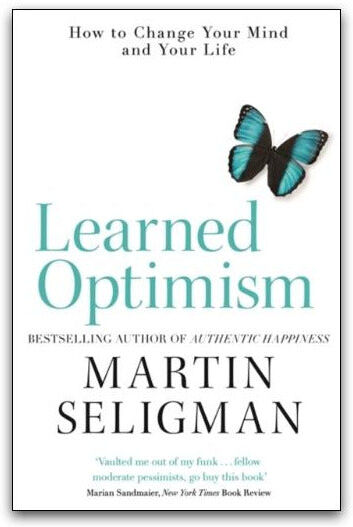
Nicholas Brealey Publishing Learned Optimism by Martin E. P. Seligman Positive Psychology, Resilience & Personal GrowthDiscover the life-changing power of positive thinking with Learned Optimism by renowned psychologist and positive psychology pioneer Martin E. P. Seligman. In this influential book, Seligman explains how optimism is not simply an inborn trait—it can be learned. Drawing on decades of psychological research, he introduces practical techniques to help readers recognize negative thought patterns, develop a more constructive outlook, and build resilience in the face of life's challenges. Whether you're looking to improve your mental wellbeing, boost confidence, manage setbacks, or achieve personal and professional success, Learned Optimism provides evidence-based strategies that can help you cultivate a healthier, more positive mindset. Why Readers Love This Book: Written by the founder of positive psychology Research-based techniques for building optimism and resilience Practical exercises to overcome negative thinking Helps improve confidence, wellbeing, and emotional strength Ideal for readers interested in psychology, self-improvement, and mental wellness A modern classic in psychology, Learned Optimism offers practical tools to help you develop a more resilient mindset and lead a happier, more fulfilling life.5,99 £*Shipping: 2,99 £Secure redirect to the provider
-
Penguin Emotional Agility by Susan David - Paperback - Bestselling Psychology & Self-Help Book for Resilience and Personal GrowthDiscover the science-backed approach to mastering your inner life with Emotional Agility by Susan David. This Wall Street Journal bestselling guide offers practical strategies for unhooking from unhelpful thoughts and emotions, helping you build greater resilience and clarity in your personal and professional life. Written by a Harvard Medical School psychologist, the book distills twenty years of research into actionable advice for navigating career transitions, relationship challenges, and the pressures of modern life. Susan David explores the internal chatter we all experience, revealing that thoughts like 'I'm not good enough' are not fixed truths, but patterns that can be reshaped. With its clear and accessible framework, Emotional Agility is a valuable resource for anyone looking to develop greater emotional agility and live a more fulfilling life.14,99 £*Shipping: 2,99 £Secure redirect to the provider
-
Sesderma Reti Age 5 Liposomal Serum Anti-Aging Innovation 30mLA facial serum for wrinkles and signs of ageing. Reduces wrinkles and fine lines. Hydrates and strengthens barrier. Restores youthful radiance. 5-Retinoid System: smooths wrinkles, accelerates renewal, and boosts collagen. Biomimetic Peptides: fill expression lines by stimulating collagen synthesis.53,26 £*Shipping: 5,22 £Secure redirect to the provider
-
Rethink Press Meltdown: How to Turn Your Hardship into Happiness by Jamie Alderton - Paperback Self-Help Book on Resilience, Mindset & Business GrowthMeltdown: How to Turn Your Hardship into Happiness is a practical self-help guide by fitness entrepreneur and transformation coach Jamie Alderton. Written for anyone whose life, work or wellbeing feels like it's falling apart, this book shows readers how to measure what's broken in their body, brain and business, then apply proven strategies to rebuild momentum, confidence and lasting happiness. Ever feel like your life is having a complete meltdown? This is the honest question at the heart of Jamie Alderton's guide. Rather than offering vague motivational platitudes, Meltdown gives readers a structured, repeatable framework for turning hardship into genuine progress. Alderton breaks life down into three core areas — body, brain and business — and teaches readers how to identify exactly what's gone off track in each. Published by Rethink Press, this paperback book is a brand-new self-help guide for those seeking to rebuild and find happiness.3,49 £*Shipping: 2,99 £Secure redirect to the provider
-
What are math coefficients?
Math coefficients are the numerical factors that are multiplied by variables in algebraic expressions or equations. They represent the scale or magnitude of the variable in the expression. For example, in the expression 3x + 5, the coefficient of x is 3. Coefficients are important in understanding the behavior and relationships between variables in mathematical equations and expressions. **
-
What are coefficients in chemistry?
In chemistry, coefficients are the numbers placed in front of chemical formulas in a balanced chemical equation. These coefficients represent the ratio of moles of each substance involved in the reaction. Coefficients are used to balance chemical equations by ensuring that the number of atoms of each element is the same on both sides of the equation. They help in determining the stoichiometry of a reaction, which is the quantitative relationship between reactants and products in a chemical reaction. **
-
How are extinction coefficients calculated?
Extinction coefficients are calculated by measuring the absorbance of a substance at a specific wavelength using a spectrophotometer. The absorbance value is then used in the Beer-Lambert law equation, A = εlc, where A is the absorbance, ε is the extinction coefficient, l is the path length of the sample, and c is the concentration of the substance. By rearranging the equation, the extinction coefficient (ε) can be calculated by dividing the absorbance (A) by the product of the path length (l) and concentration (c) of the substance. **
-
How do you determine the coefficients?
The coefficients in a mathematical equation are determined through a process called regression analysis. This involves using statistical techniques to find the best-fitting line or curve that represents the relationship between the variables in the equation. The coefficients are then calculated based on the data points and the specific regression model being used, such as linear regression or polynomial regression. The goal is to find the coefficients that minimize the difference between the predicted values from the model and the actual observed values in the data. **
Similar search terms for Coefficients
-
EmperorS4 Hanamikoji Compact Strategy Card Game for Two Players - Strategy GameA compact strategy card game set in Kyoto's Hanamikoji Street. Players compete to earn geisha favor by managing hand and making timed decisions. Designed for two players, suitable for ages 10 and up.13,79 £*Shipping: 3,95 £Secure redirect to the provider
-
Pearson Key Strategy Tools by Vaughan Evans - 88 Tools for Every Manager to Build a Winning Strategy - Paperback - Business Strategy BookKey Strategy Tools by Vaughan Evans is a comprehensive guide for managers who want to build a winning strategy. Written by strategy consultant Vaughan Evans, this book distils decades of consulting experience into 88 practical tools covering every stage of the strategy process. From market analysis to competitive positioning and implementation, it equips managers, entrepreneurs, and MBA students with a framework for transforming their business into a scalable and valuable asset. The book presents a complete toolkit for strategy development, helping readers to understand why some companies succeed while others struggle, and providing actionable advice on how to achieve success. Published by Pearson, this paperback is a valuable resource for anyone looking to improve their business strategy.2,99 £*Shipping: 2,99 £Secure redirect to the provider
-
Profile Books Stillness Is The Key: An Ancient Strategy For Modern Life by Ryan Holiday - Hardback - Stoic Self-Help Book for Focus, Calm & Personal GrowthDiscover the timeless wisdom of Stillness Is the Key, a hardback guide to finding calm, clarity, and purpose in a busy world. Drawing on Stoic philosophy, Buddhist teaching, and stories from history's greatest leaders, thinkers, and athletes, Ryan Holiday argues that stillness is a discipline anyone can master. This book is a practical manual for living a calmer, sharper life, and is the final installment in Holiday's bestselling trilogy, alongside The Obstacle Is the Way and Ego Is the Enemy. Through three parts covering the mind, spirit, and body, Holiday explores how history's greatest figures cultivated inner stillness to achieve outer success, weaving together philosophy, biography, and psychology to reveal the secrets of the most successful and fulfilled individuals.8,99 £*Shipping: 2,99 £Secure redirect to the provider
-
How do I determine the coefficients?
To determine the coefficients in a mathematical equation, you can use various methods depending on the type of equation. For linear equations, you can use the method of substitution or elimination to solve for the coefficients. For quadratic equations, you can use the method of completing the square or the quadratic formula to find the coefficients. In general, you can also use regression analysis or curve fitting techniques to determine the coefficients in a more complex equation. **
-
How do you calculate the extinction coefficients?
The extinction coefficient, also known as molar absorptivity, is calculated using the Beer-Lambert law, which relates the absorbance of a substance to its concentration and the path length of the sample. The formula for calculating the extinction coefficient is ε = A / (c * l), where ε is the extinction coefficient, A is the absorbance, c is the concentration, and l is the path length. By measuring the absorbance of a known concentration of the substance at a specific path length, the extinction coefficient can be determined. This value is important for quantifying the concentration of a substance in a solution using spectrophotometry. **
-
What is the problem with the coefficients?
The problem with the coefficients is that they can be sensitive to the scale of the input variables. This means that if the input variables are on different scales, the coefficients may not accurately represent the true relationship between the variables and the target. Additionally, coefficients can be difficult to interpret when the input variables are not standardized, making it challenging to compare the impact of different variables on the target. Standardizing the input variables can help address these issues by putting them on the same scale and making the coefficients more interpretable and comparable. **
-
How do you get to the coefficients here?
To get the coefficients in a linear regression model, we use a method called ordinary least squares (OLS). This method minimizes the sum of the squared differences between the observed values and the values predicted by the model. By minimizing this sum, we can find the coefficients that best fit the data. The coefficients represent the relationship between the independent variables and the dependent variable in the model. **
* All prices are inclusive of VAT and, if applicable, plus shipping costs. The offer information is based on the details provided by the respective shop and is updated through automated processes. Real-time updates do not occur, so deviations can occur in individual cases. ** Note: Parts of this content were created by AI.