Buy businessleadership.eu ?
We are moving the project
businessleadership.eu .
Are you interested in purchasing the domain
businessleadership.eu ?
domain@kv-gmbh.de · 0541-91531010
Buy businessleadership.eu ?
What is exponential growth in mathematics?
Exponential growth in mathematics refers to a pattern of growth where the rate at which something increases is proportional to its current value. This means that as the quantity being measured grows, the rate of growth also increases. Exponential growth is often represented by an equation in the form of y = a * (1 + r)^x, where 'a' is the initial value, 'r' is the growth rate, 'x' is the time, and 'y' is the final value. This type of growth leads to rapid and accelerating increases over time. **
Is exponential growth complicated in mathematics?
Exponential growth can be complicated in mathematics because it involves a constant rate of change over time, leading to rapidly increasing values. The concept of exponential growth is often studied in calculus and requires understanding of functions, limits, and derivatives. Additionally, exponential growth can be challenging to work with because it can lead to very large numbers in a short amount of time, making calculations and predictions more complex. Overall, while the concept of exponential growth may seem straightforward, its mathematical implications and applications can be quite intricate. **

Similar search terms for Mathematics
Top-Angebote
Products related to Mathematics:
-
The Laundry Roleplaying Game Second Edition: Operative’s Handbook - Cubicle 7 (Supplement, Occult Mathematics, Roleplaying Game Book)Immerse yourself in the world of occult mathematics and high-tech espionage with The Laundry Roleplaying Game Second Edition: Operative’s Handbook. This supplement is designed for players and agents working within the Laundry organisation, providing operational guidance, restricted equipment, and mission-focused material. Explore settings and threats inspired by the world of The Laundry, and use the handbook to equip your agents for assignments ranging from occult investigations to interdimensional emergencies. Missions may take them from Amsterdam and Saint Martin to Dunwich and Milton Keynes, while equipment such as the Hand of Glory, Basilisk Gun, and Necronomiphone are at their disposal.76,02 £*Shipping: 0,00 £Secure redirect to the provider
-
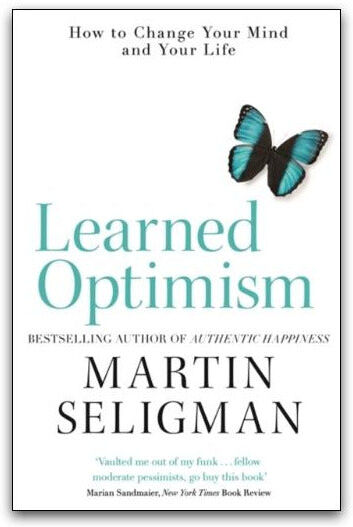
Nicholas Brealey Publishing Learned Optimism by Martin E. P. Seligman Positive Psychology, Resilience & Personal GrowthDiscover the life-changing power of positive thinking with Learned Optimism by renowned psychologist and positive psychology pioneer Martin E. P. Seligman. In this influential book, Seligman explains how optimism is not simply an inborn trait—it can be learned. Drawing on decades of psychological research, he introduces practical techniques to help readers recognize negative thought patterns, develop a more constructive outlook, and build resilience in the face of life's challenges. Whether you're looking to improve your mental wellbeing, boost confidence, manage setbacks, or achieve personal and professional success, Learned Optimism provides evidence-based strategies that can help you cultivate a healthier, more positive mindset. Why Readers Love This Book: Written by the founder of positive psychology Research-based techniques for building optimism and resilience Practical exercises to overcome negative thinking Helps improve confidence, wellbeing, and emotional strength Ideal for readers interested in psychology, self-improvement, and mental wellness A modern classic in psychology, Learned Optimism offers practical tools to help you develop a more resilient mindset and lead a happier, more fulfilling life.5,99 £*Shipping: 2,99 £Secure redirect to the provider
-
Penguin Emotional Agility by Susan David - Paperback - Bestselling Psychology & Self-Help Book for Resilience and Personal GrowthDiscover the science-backed approach to mastering your inner life with Emotional Agility by Susan David. This Wall Street Journal bestselling guide offers practical strategies for unhooking from unhelpful thoughts and emotions, helping you build greater resilience and clarity in your personal and professional life. Written by a Harvard Medical School psychologist, the book distills twenty years of research into actionable advice for navigating career transitions, relationship challenges, and the pressures of modern life. Susan David explores the internal chatter we all experience, revealing that thoughts like 'I'm not good enough' are not fixed truths, but patterns that can be reshaped. With its clear and accessible framework, Emotional Agility is a valuable resource for anyone looking to develop greater emotional agility and live a more fulfilling life.14,99 £*Shipping: 2,99 £Secure redirect to the provider
-
Sesderma Reti Age 5 Liposomal Serum Anti-Aging Innovation 30mLA facial serum for wrinkles and signs of ageing. Reduces wrinkles and fine lines. Hydrates and strengthens barrier. Restores youthful radiance. 5-Retinoid System: smooths wrinkles, accelerates renewal, and boosts collagen. Biomimetic Peptides: fill expression lines by stimulating collagen synthesis.53,26 £*Shipping: 5,22 £Secure redirect to the provider



-
What are growth processes in mathematics?
Growth processes in mathematics refer to the development and expansion of mathematical concepts, skills, and understanding over time. This can involve building on foundational knowledge, mastering new techniques, and making connections between different areas of mathematics. Growth processes also include the ability to solve increasingly complex problems, think critically, and apply mathematical reasoning in various contexts. Ultimately, growth in mathematics is a continuous journey of learning and improvement that leads to a deeper and more comprehensive understanding of the subject. **
-
What is a growth task in mathematics?
A growth task in mathematics is a problem or activity that challenges students to think critically, apply their mathematical knowledge, and develop their problem-solving skills. These tasks often require students to go beyond rote memorization and apply mathematical concepts in new and unfamiliar situations. By engaging with growth tasks, students can deepen their understanding of mathematical concepts and develop a growth mindset towards learning mathematics. **
-
What is the strongest growth in mathematics?
The strongest growth in mathematics is currently in the field of data science and machine learning. With the increasing availability of large datasets and the development of powerful computational tools, there has been a surge in the application of mathematical techniques to analyze and extract insights from data. This has led to advancements in areas such as statistical modeling, optimization, and algorithm development, making data science and machine learning one of the fastest-growing and most impactful areas of mathematics today. **
-
How do growth processes work in mathematics?
In mathematics, growth processes refer to the way in which quantities increase or decrease over time or with respect to another variable. These processes can be modeled using various mathematical functions such as linear, exponential, or logarithmic functions. Growth processes can be described by equations that show how a quantity changes in relation to another variable, allowing for predictions and analysis of the behavior of the system. Understanding growth processes in mathematics is essential for various applications such as population growth, compound interest, and exponential decay. **


What are exponential growth models in mathematics?
Exponential growth models in mathematics are used to represent situations where a quantity grows at a constant percentage rate over time. The general form of an exponential growth model is given by the equation y = a * (1 + r)^t, where y is the final amount, a is the initial amount, r is the growth rate, and t is the time. Exponential growth models are commonly used in finance, biology, and other fields to describe population growth, compound interest, and other phenomena that exhibit rapid and continuous growth. These models are important for understanding and predicting the behavior of dynamic systems over time. **
How does exponential growth work in mathematics?
Exponential growth in mathematics refers to a pattern of growth where a quantity increases at a constant percentage rate over a period of time. This means that the rate of growth itself increases over time, leading to a rapid increase in the quantity being measured. In mathematical terms, exponential growth is represented by an equation of the form y = a * (1 + r)^t, where y is the final amount, a is the initial amount, r is the growth rate, and t is the time. This type of growth is commonly seen in natural phenomena such as population growth, compound interest, and the spread of diseases. **
Top-Angebote
Products related to Mathematics:
-
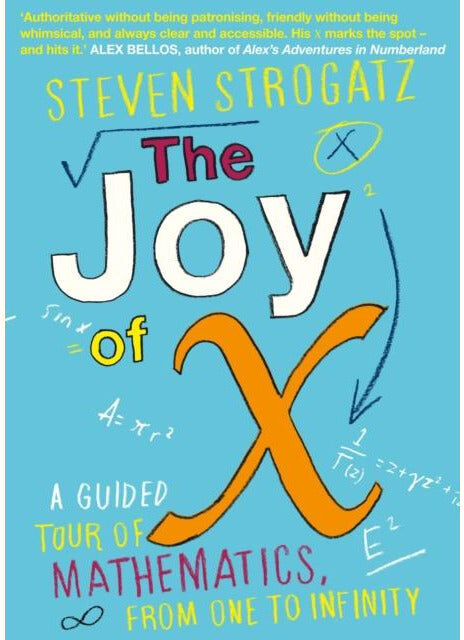
Atlantic Books The Joy of X: A Guided Tour of Mathematics from One to InfinityAward-winning Steven Strogatz, one of the foremost popularisers of maths, has written a witty and fascinating account of maths' most compelling ideas and how, so often, they are an integral part of everyday life. Maths is everywhere, often where we don't even realise. Award-winning professor Steven Strogatz acts as our guide as he takes us on a tour of numbers that - unbeknownst to the unitiated - connect pop culture, literature, art, philosophy, current affairs, business and even every day life. In The Joy of X, Strogatz explains the great ideas of maths - from negative numbers to calculus, fat tails to infinity - with clarity, wit and insight. He is the maths teacher you never had and this book is perfect for the smart and curious, the expert and the beginner.6,99 £*Shipping: 2,99 £Secure redirect to the provider
-
The Laundry Roleplaying Game Second Edition: Operative’s Handbook by Cubicle Seven (Roleplaying Supplement, Occult Mathematics, Espionage)Immerse yourself in the world of The Laundry Roleplaying Game with the Second Edition Operative's Handbook. This supplement is designed for players and Game Masters, providing guidance for missions involving occult mathematics, high-tech espionage, and supernatural threats. Key features include mission-focused material, restricted equipment such as the Hand of Glory, Basilisk Gun, and Necronomiphone, and training and operational material presented in the setting's distinctive bureaucratic style. Explore locations and scenarios ranging from Amsterdam and Saint Martin to Dunwich and Milton Keynes. The handbook is designed for use with the Second Edition of The Laundry Roleplaying Game and is supplied as a supplement.38,34 £*Shipping: 3,95 £Secure redirect to the provider
-
The Laundry Roleplaying Game Second Edition: Operative’s Handbook - Cubicle 7 (Supplement, Occult Mathematics, Roleplaying Game Book)Immerse yourself in the world of occult mathematics and high-tech espionage with The Laundry Roleplaying Game Second Edition: Operative’s Handbook. This supplement is designed for players and agents working within the Laundry organisation, providing operational guidance, restricted equipment, and mission-focused material. Explore settings and threats inspired by the world of The Laundry, and use the handbook to equip your agents for assignments ranging from occult investigations to interdimensional emergencies. Missions may take them from Amsterdam and Saint Martin to Dunwich and Milton Keynes, while equipment such as the Hand of Glory, Basilisk Gun, and Necronomiphone are at their disposal.76,02 £*Shipping: 0,00 £Secure redirect to the provider
-
Nicholas Brealey Publishing Learned Optimism by Martin E. P. Seligman Positive Psychology, Resilience & Personal GrowthDiscover the life-changing power of positive thinking with Learned Optimism by renowned psychologist and positive psychology pioneer Martin E. P. Seligman. In this influential book, Seligman explains how optimism is not simply an inborn trait—it can be learned. Drawing on decades of psychological research, he introduces practical techniques to help readers recognize negative thought patterns, develop a more constructive outlook, and build resilience in the face of life's challenges. Whether you're looking to improve your mental wellbeing, boost confidence, manage setbacks, or achieve personal and professional success, Learned Optimism provides evidence-based strategies that can help you cultivate a healthier, more positive mindset. Why Readers Love This Book: Written by the founder of positive psychology Research-based techniques for building optimism and resilience Practical exercises to overcome negative thinking Helps improve confidence, wellbeing, and emotional strength Ideal for readers interested in psychology, self-improvement, and mental wellness A modern classic in psychology, Learned Optimism offers practical tools to help you develop a more resilient mindset and lead a happier, more fulfilling life.5,99 £*Shipping: 2,99 £Secure redirect to the provider
-
What is exponential growth in mathematics?
Exponential growth in mathematics refers to a pattern of growth where the rate at which something increases is proportional to its current value. This means that as the quantity being measured grows, the rate of growth also increases. Exponential growth is often represented by an equation in the form of y = a * (1 + r)^x, where 'a' is the initial value, 'r' is the growth rate, 'x' is the time, and 'y' is the final value. This type of growth leads to rapid and accelerating increases over time. **
-
Is exponential growth complicated in mathematics?
Exponential growth can be complicated in mathematics because it involves a constant rate of change over time, leading to rapidly increasing values. The concept of exponential growth is often studied in calculus and requires understanding of functions, limits, and derivatives. Additionally, exponential growth can be challenging to work with because it can lead to very large numbers in a short amount of time, making calculations and predictions more complex. Overall, while the concept of exponential growth may seem straightforward, its mathematical implications and applications can be quite intricate. **
-
What are growth processes in mathematics?
Growth processes in mathematics refer to the development and expansion of mathematical concepts, skills, and understanding over time. This can involve building on foundational knowledge, mastering new techniques, and making connections between different areas of mathematics. Growth processes also include the ability to solve increasingly complex problems, think critically, and apply mathematical reasoning in various contexts. Ultimately, growth in mathematics is a continuous journey of learning and improvement that leads to a deeper and more comprehensive understanding of the subject. **
-
What is a growth task in mathematics?
A growth task in mathematics is a problem or activity that challenges students to think critically, apply their mathematical knowledge, and develop their problem-solving skills. These tasks often require students to go beyond rote memorization and apply mathematical concepts in new and unfamiliar situations. By engaging with growth tasks, students can deepen their understanding of mathematical concepts and develop a growth mindset towards learning mathematics. **
Similar search terms for Mathematics
-
Penguin Emotional Agility by Susan David - Paperback - Bestselling Psychology & Self-Help Book for Resilience and Personal GrowthDiscover the science-backed approach to mastering your inner life with Emotional Agility by Susan David. This Wall Street Journal bestselling guide offers practical strategies for unhooking from unhelpful thoughts and emotions, helping you build greater resilience and clarity in your personal and professional life. Written by a Harvard Medical School psychologist, the book distills twenty years of research into actionable advice for navigating career transitions, relationship challenges, and the pressures of modern life. Susan David explores the internal chatter we all experience, revealing that thoughts like 'I'm not good enough' are not fixed truths, but patterns that can be reshaped. With its clear and accessible framework, Emotional Agility is a valuable resource for anyone looking to develop greater emotional agility and live a more fulfilling life.14,99 £*Shipping: 2,99 £Secure redirect to the provider
-
Sesderma Reti Age 5 Liposomal Serum Anti-Aging Innovation 30mLA facial serum for wrinkles and signs of ageing. Reduces wrinkles and fine lines. Hydrates and strengthens barrier. Restores youthful radiance. 5-Retinoid System: smooths wrinkles, accelerates renewal, and boosts collagen. Biomimetic Peptides: fill expression lines by stimulating collagen synthesis.53,26 £*Shipping: 5,22 £Secure redirect to the provider
-
Rethink Press Meltdown: How to Turn Your Hardship into Happiness by Jamie Alderton - Paperback Self-Help Book on Resilience, Mindset & Business GrowthMeltdown: How to Turn Your Hardship into Happiness is a practical self-help guide by fitness entrepreneur and transformation coach Jamie Alderton. Written for anyone whose life, work or wellbeing feels like it's falling apart, this book shows readers how to measure what's broken in their body, brain and business, then apply proven strategies to rebuild momentum, confidence and lasting happiness. Ever feel like your life is having a complete meltdown? This is the honest question at the heart of Jamie Alderton's guide. Rather than offering vague motivational platitudes, Meltdown gives readers a structured, repeatable framework for turning hardship into genuine progress. Alderton breaks life down into three core areas — body, brain and business — and teaches readers how to identify exactly what's gone off track in each. Published by Rethink Press, this paperback book is a brand-new self-help guide for those seeking to rebuild and find happiness.3,49 £*Shipping: 2,99 £Secure redirect to the provider
-
What is the strongest growth in mathematics?
The strongest growth in mathematics is currently in the field of data science and machine learning. With the increasing availability of large datasets and the development of powerful computational tools, there has been a surge in the application of mathematical techniques to analyze and extract insights from data. This has led to advancements in areas such as statistical modeling, optimization, and algorithm development, making data science and machine learning one of the fastest-growing and most impactful areas of mathematics today. **
-
How do growth processes work in mathematics?
In mathematics, growth processes refer to the way in which quantities increase or decrease over time or with respect to another variable. These processes can be modeled using various mathematical functions such as linear, exponential, or logarithmic functions. Growth processes can be described by equations that show how a quantity changes in relation to another variable, allowing for predictions and analysis of the behavior of the system. Understanding growth processes in mathematics is essential for various applications such as population growth, compound interest, and exponential decay. **
-
What are exponential growth models in mathematics?
Exponential growth models in mathematics are used to represent situations where a quantity grows at a constant percentage rate over time. The general form of an exponential growth model is given by the equation y = a * (1 + r)^t, where y is the final amount, a is the initial amount, r is the growth rate, and t is the time. Exponential growth models are commonly used in finance, biology, and other fields to describe population growth, compound interest, and other phenomena that exhibit rapid and continuous growth. These models are important for understanding and predicting the behavior of dynamic systems over time. **
-
How does exponential growth work in mathematics?
Exponential growth in mathematics refers to a pattern of growth where a quantity increases at a constant percentage rate over a period of time. This means that the rate of growth itself increases over time, leading to a rapid increase in the quantity being measured. In mathematical terms, exponential growth is represented by an equation of the form y = a * (1 + r)^t, where y is the final amount, a is the initial amount, r is the growth rate, and t is the time. This type of growth is commonly seen in natural phenomena such as population growth, compound interest, and the spread of diseases. **
* All prices are inclusive of VAT and, if applicable, plus shipping costs. The offer information is based on the details provided by the respective shop and is updated through automated processes. Real-time updates do not occur, so deviations can occur in individual cases. ** Note: Parts of this content were created by AI.